
Actiniaria
Amblyraja hyperborea
Amphidiscella monai
Amphipoda
Antedonidae
Aphrocallistidae
Asbestopluma (Asbestopluma) furcata
Ascidiacea
Asconema foliatum
Asconema megaatrialia
Asteroidea
Bathycrinus carpenterii
Bathyphellia margaritacea
Beroe sp.
Bivalvia
Brachiopoda
Bryozoa
Buccinidae
Caprellidae
Caridea
Catherinum striolatum
Caulophacus (Caulophacus) arcticus
Cirroteuthis muelleri
Cladorhiza spp.
Colossendeis proboscidea
Crossota sp.
Ctenophora
Decapodiformes
Demospongiae: Fan-shaped sponges
Elpidia sp.
Gaidropsarus argentatus
Gastropoda
Gersemia spp.
Gorgonocephalus sp.
Hexadella dedritifera
Hymedesmiidae
Hymenaster sp.
Irregularia
Isopoda
Keratoisididae
Kolga hyalina
Lissodendoryx (Lissodendoryx) complicata
Lucernaria bathyphila
Lycenchelys platyrhina
Lycodes frigidus
Macrourus berglax
Molgula sp.
Nemertea
Neohela sp.
Nudibranchia
Ophiuroidea
Paraliparis bathybius
Polymastiidae
Polynoidae
Psychrolutidae
Ptychogastria polaris
Pycnogonida
Reinhardtius hippoglossoides
Rhodichthys regina
Rossellidae: Schaudinnia rosea / Trichasterina borealis / Scyphidium septentrionale
Sabellidae
Serpulidae
Siboglinidae
Stauromedusae
Stylocordyla borealis
Tentorium sp.
Tetractinellida
Tubulariidae
Umbellula encrinus
Bathyphellia margaritacea
E: North Pole sea anemone
Identification
- Morphology: Bright pink sea anemone with a round oral disc and small thin tentacles. Body column is long and thin.
Habitat
- Geographical Distribution:
- Mohn’s Treasure (Ramirez-Llodra et al., 2020)
- Fåvne (Gjærløw, 2023)
- The Nansen and Amundsen Basins (Rybakova et al., 2019). The species was one of six taxa that were abundant and common in all conducted transects.
- The North Pole (Sanamyan et al., 2009)
- Depth: 400-4262 m (Sanamyan et al., 2009)
- Substrate: Hard and soft, often in sediments.
Ecology
- Mobility: Sessile
Life History
Comments
References
- Ramirez-Llodra, Eva and Hilario, Ana and Paulsen, Emil and Costa, Carolina Ventura and Bakken, Torkild and Johnsen, Geir and Rapp, Hans Tore (2020). Benthic Communities on the Mohn's Treasure Mound: Implications for Management of Seabed Mining in the Arctic Mid-Ocean Ridge. Frontiers in Marine Science. DOI Link
- Gjærløw, Sofie (2023). Characterisation of Megabenthic Community Structure at the Fåvne Hydrothermal Vent Field, with Implications for Environmental Management of Seabed Mining. Link
- Rybakova, Elena and Kremenetskaia, Antonina and Vedenin, Andrey and Boetius, Antje and Gebruk, Andrey (2019). Deep-sea megabenthos communities of the Eurasian Central Arctic are influenced by ice-cover and sea-ice algal falls. PLoS ONE. DOI Link
- Sanamyan, N. P. and Cherniaev, E. S. and Sanamyan, K. E. (2009). Bathyphellia margaritacea (Cnidaria: Actiniaria): the most northern species of the world. Polar Biology. DOI Link
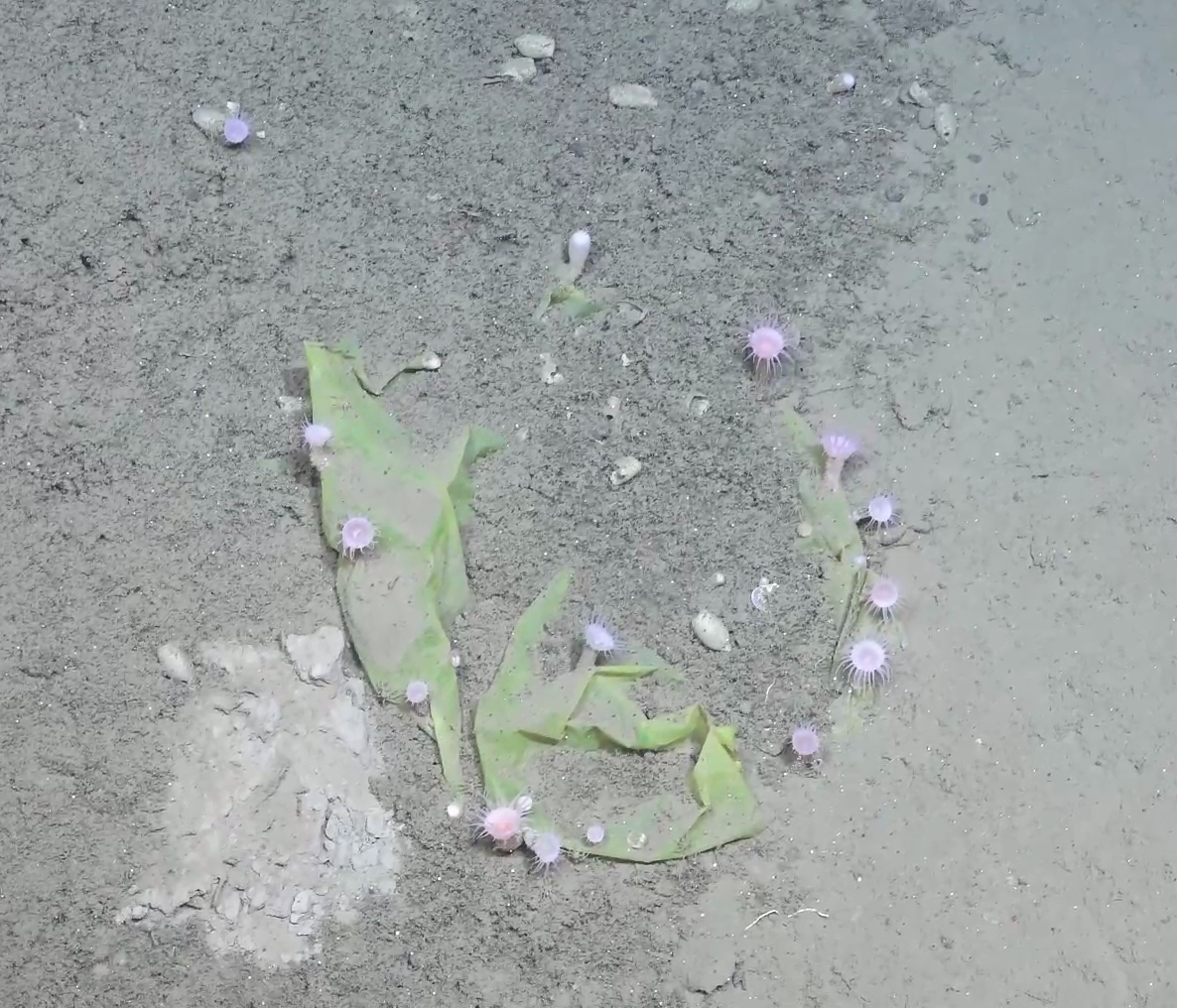
Bathyphellia sp. On trash/plastic in the deep sea.
Depth: 3287 m.
Image by GoNorth-2022 (ÆGIR6000/NORMAR)
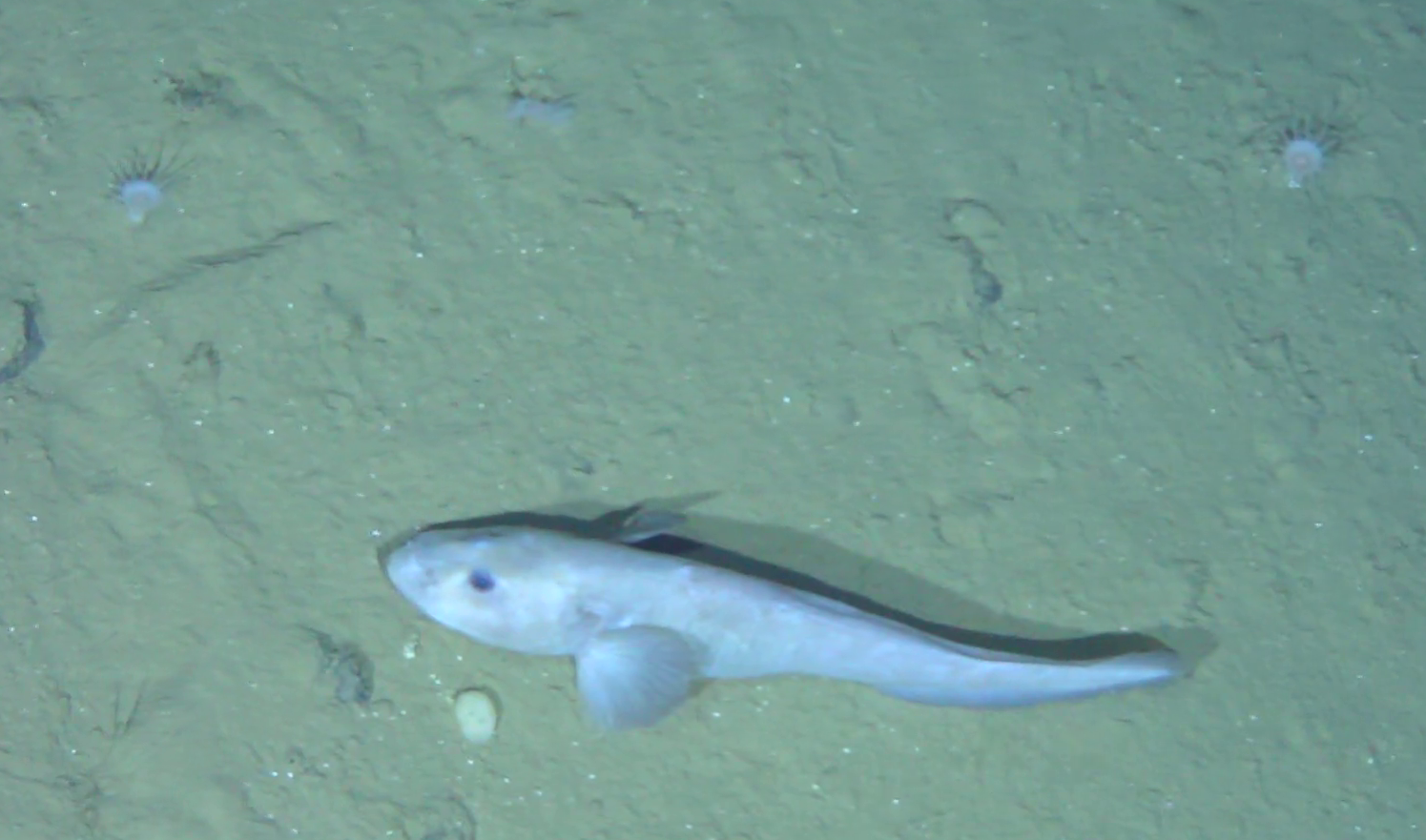
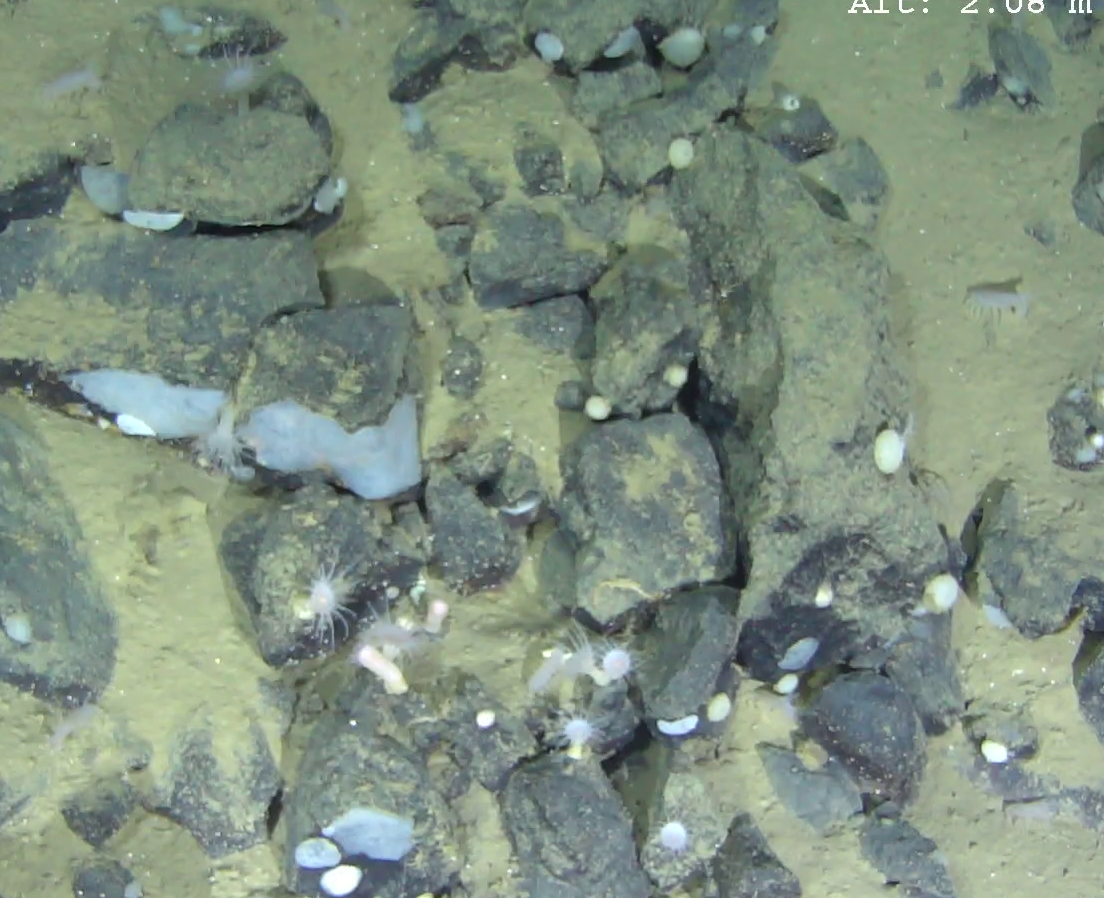
Depth: 2618 m.
Image by: NOD-2019
Taxonomy Summary
- Phylum Cnidaria
- Class Hexacorallia
- Order Actiniaria
- Family Bathyphelliidae
- Genus Bathyphellia